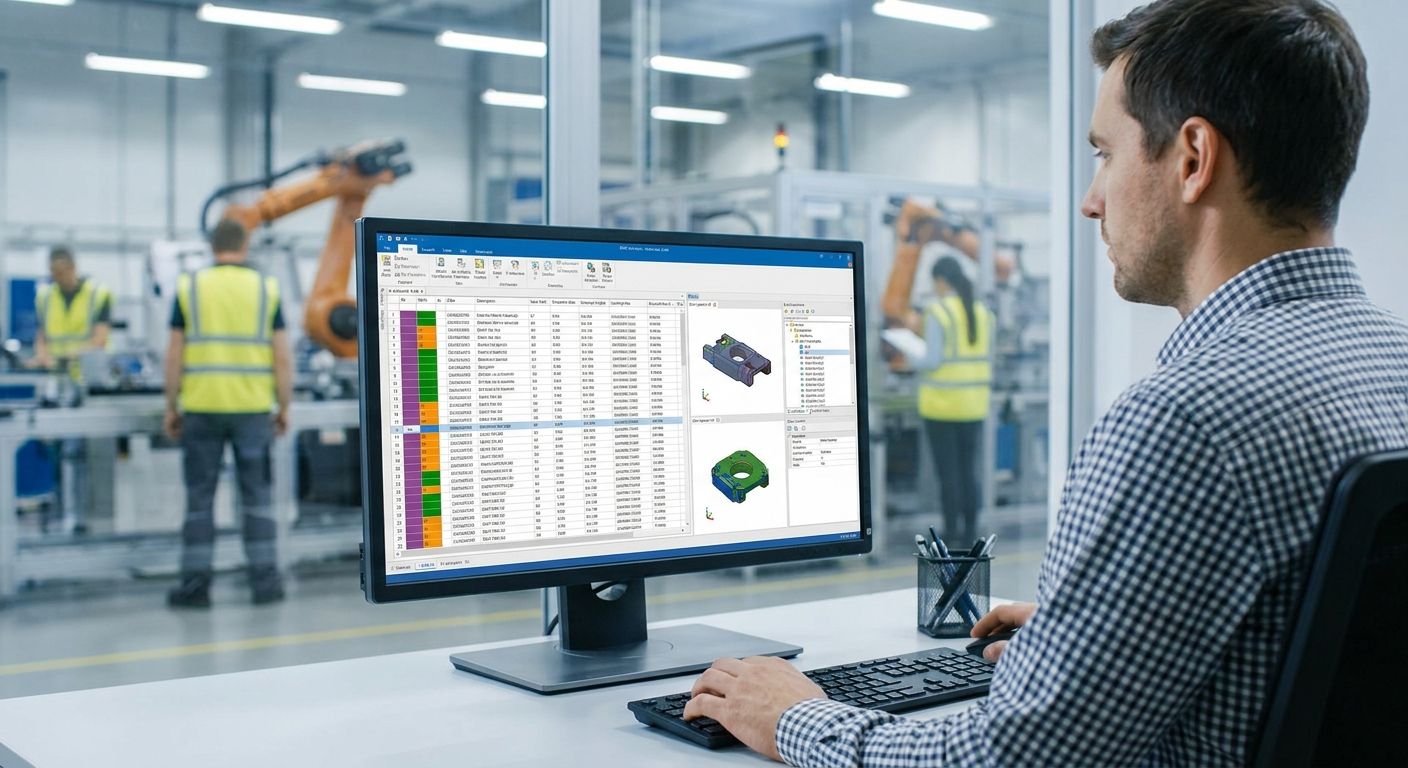
Job work units live in a different reality than standard manufacturers: raw material often belongs to someone else, production happens in stages across multiple parties, and a single missed E-Way Bill or job-work challan can freeze a shipment at the gate. This guide breaks down what job work management software actually needs to do for units that process, assemble, or finish goods on behalf of principals.
- Job work management software must track raw material issued and returned separately from owned inventory — Oxapher does this through Job Work In/Out.
- GST compliance is non-negotiable: E-Way Bills trigger above Rs 50,000 in goods movement, verdict Buy on tools that automate this.
- Generic accounting software without job-work challan support under GST Rule 45 is a Skip for job work units in 2026.
- WhatsApp-based follow-up with principals cuts payment delays but is a Consider, not a dealbreaker, for smaller job work units.
Why this matters
Job work units get squeezed from both sides. Principals want visibility into where their material is and when the finished goods ship back. GST officers want clean paperwork on every movement of goods that never actually changed ownership.
Spreadsheets and generic accounting tools were not built for this. They track what you own, not what you're processing on someone else's behalf. That gap is exactly where job work management software earns its cost — it treats job-work-in and job-work-out as first-class transactions, not workarounds.
Who this is for
This guide is for owners and operations managers running job work units — dyeing and printing houses, textile processing units, metal finishing shops, electroplating units, powder coating vendors, and contract manufacturers who receive raw material from principals and return finished or semi-finished goods. If you issue job-work challans under GST Rule 45, track rejection and scrap against a principal's material, or bill job-work charges separately from material value, you're the buyer this software is built for.
Oxapher is built around exactly this workflow — Job Work In and Job Work Out sit alongside multi-stage production, BOM management, and GST automation in one platform, instead of forcing you to stitch together separate tools for compliance and production.
What to look for in job work management software
Separate tracking for Job Work In and Job Work Out
Material you receive from a principal is not your inventory — it needs its own ledger, separate from goods you own and sell. Software that lumps job-work material into general stock creates GST mismatches and makes it impossible to reconcile what you owe back to each principal. Look for explicit Job Work In/Out modules, not a workaround built on generic stock transfers.
GST compliance built for job work, not retail
Job work movements need delivery challans, not always tax invoices, and E-Way Bills apply once the consignment value crosses Rs 50,000. On top of that, e-invoicing became mandatory for businesses above Rs 5 crore turnover, and that threshold now catches mid-sized job work units that assumed they were exempt. Software that automates HSN/SAC classification and E-Way Bill generation for job-work challans saves hours every week and avoids penalty exposure.
Multi-stage production and BOM support
Job work rarely happens in one step. A textile unit might handle dyeing, then printing, then finishing — each stage consuming and releasing different quantities of the principal's material. Software needs Bill of Materials management that tracks yield loss, rejection, and scrap at each stage, not just a single "in and out" entry.
Production costing separate from material cost
You're billing for the job-work charge, not the material — but the platform still needs to show true production cost including labor, machine time, and rejection percentage. Without this, you're pricing job-work charges on guesswork instead of margin.
Communication with principals and job workers
Most delays in job work come from unclear communication — a principal asking "where's my batch" five times a day over phone calls. WhatsApp integration for status updates and payment follow-ups keeps that noise out of your inbox and creates a record you can reference later.
Accounting that reconciles automatically
Job-work charges, payables to sub-contractors, and receivables from principals need to land in your books without manual re-entry. Software where sales, purchases, and job-work transactions post directly to the ledger cuts reconciliation time at month-end, especially before GSTR-3B filing.
Top picks for job work units
The production pick — built for multi-stage job work
Oxapher's production module handles BOM management, Job Work In/Out, and multi-stage manufacturing in one place, with rejection and scrap tracking at each stage. The ERP software for textile manufacturers page shows how this applies to dyeing, printing, and finishing workflows specifically — the exact chain most textile job work units run. One number that matters here: E-Way Bills trigger at Rs 50,000 in goods value, and the platform's GST automation is built around that threshold. Verdict: Buy for units running more than one production stage per job.
The materials pick — for units juggling multiple principals' stock
Job work units often hold material from three or four principals at once, and mixing them up is the fastest way to create a compliance headache. The purchase order software for manufacturing SMEs covers purchase orders, stock transfers, and batch tracking — useful when you're also sourcing your own consumables (dyes, chemicals, packaging) alongside processing someone else's raw material. Verdict: Buy if you handle job work for more than two principals simultaneously.
The relationship pick — for units chasing follow-ups manually
If your biggest operational headache is chasing principals for approvals or payment status over calls and texts, the CRM for manufacturing businesses in India page addresses the pipeline side — tracking each principal relationship from inquiry through repeat orders, with WhatsApp built in. It's less critical if you work with the same two or three principals on long-term contracts. Verdict: Consider for units actively growing their principal base in 2026.
What to avoid
- Generic accounting software with no job-work challan support. It looks like it handles invoicing fine, but without Rule 45 challan formats, you're manually recreating compliance documents every cycle.
- Inventory tools that don't separate owned stock from job-work material. This looks like a minor UI gap until your GSTR-1 filing shows material you never actually purchased.
- Spreadsheet-based BOM tracking. It works for one product line. It breaks the moment you're running multi-stage jobs for three principals with different specs at once.
See Oxapher on your job work workflow
Walk through Job Work In/Out, GST automation, and production tracking in one setup.
Verdict comparison table
| Pick | Job Work In/Out | GST Compliance | Multi-stage BOM | WhatsApp Follow-up | Verdict |
|---|---|---|---|---|---|
| Production pick (textile ERP) | Yes | Yes | Yes | Yes | Buy |
| Materials pick (purchase orders) | Partial | Yes | Partial | Yes | Buy |
| Relationship pick (CRM) | No | No | No | Yes | Consider |
All three picks sit inside the same Oxapher platform — the table reflects which module solves your loudest problem first, not three separate products.
FAQ
What is job work management software?
Job work management software tracks raw material issued to and returned from job workers separately from owned inventory, alongside GST compliance for job-work challans and E-Way Bills. It differs from standard inventory software because material ownership never transfers.
Is job work management software different from regular ERP software?
Yes — regular ERP assumes you own all the material in your warehouse, while job work management software separates job-work-in material (belongs to a principal) from your own stock. Oxapher handles both inside one platform through its Job Work In/Out module.
Does job work software generate E-Way Bills automatically?
Software built for job work should generate E-Way Bills once consignment value crosses Rs 50,000, the standard national threshold. Check that HSN/SAC codes are pre-mapped so the bill generates without manual data entry each time.
Can job work management software track raw material issued to sub-contractors?
Yes, this is the core function — Job Work Out tracking follows material you send to sub-contractors and reconciles what comes back, flagging shortages or rejections. Without this, reconciling sub-contractor accounts happens manually at month-end.
Is WhatsApp integration necessary for job work units?
It's not mandatory but it removes a real bottleneck — principals asking for status updates by phone. Bulk and individual WhatsApp messaging inside the same platform as your job-work records keeps that communication tied to the actual order.
How much does job work management software cost in India in 2026?
Pricing varies by vendor, number of users, and modules included, so check current plans directly on the vendor's site rather than relying on a fixed figure. Compare what's included — GST automation and manufacturing modules are often priced separately from basic invoicing.
Does job work management software handle multi-stage production?
Software with BOM management and multi-stage production tracking follows material through each processing step — dyeing, then printing, then finishing, for example — with rejection and scrap logged at every stage. Single-stage tools miss this entirely.
What GST document is required for moving job-work material?
A delivery challan under GST Rule 45 accompanies job-work material movement, and an E-Way Bill is required once the consignment crosses Rs 50,000 in value. Job work management software should generate both without manual re-entry.
One last thing
The E-Way Bill threshold hasn't moved, but the e-invoicing turnover threshold has dropped repeatedly over the past few years — down to Rs 5 crore. Job work units that assumed e-invoicing was for "bigger companies" are the ones getting caught off guard in 2026. If your unit is anywhere near that turnover line, check e-invoicing compliance before you check anything else on this list.